
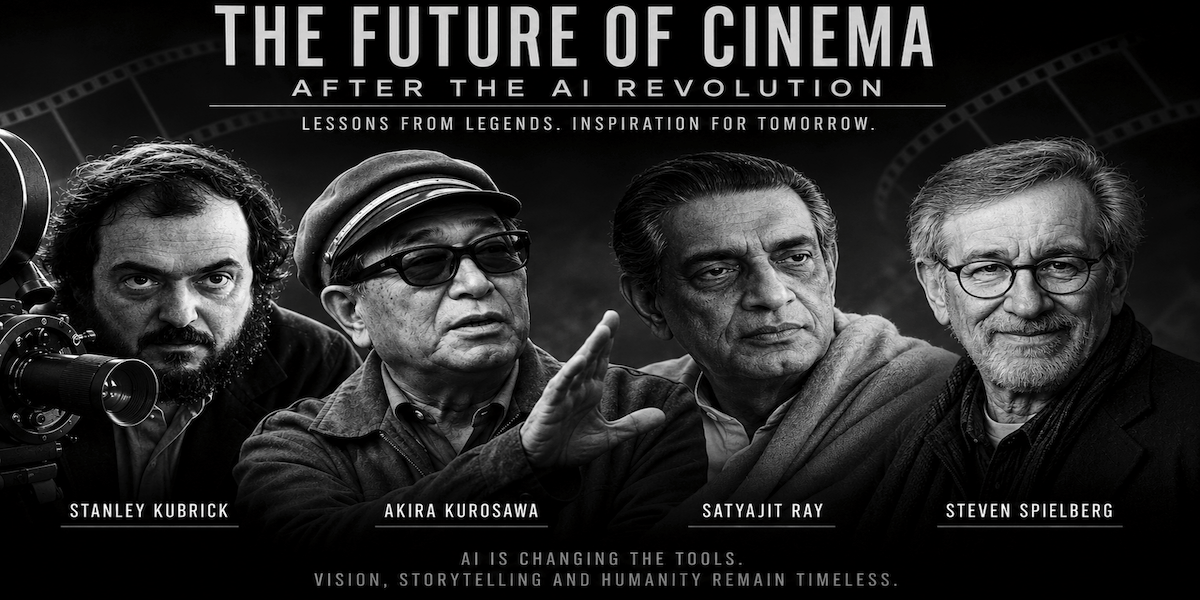
The Future of Cinema After the AI Revolution: Global Trends and India
Introduction:
Artificial Intelligence (AI) is fundamentally changing the economics, aesthetics, and production methods of cinema. Like the arrival of sound in the 1930s, color in the 1950s, digital cinematography in the 2000s, and streaming in the 2010s, AI represents a structural shift rather than merely another technological tool. Unlike previous innovations, AI can now participate in creative decision-making—writing, editing, visual generation, voice synthesis, and audience prediction—raising questions about authorship, originality, employment, and artistic identity.
The future of cinema will not be determined by AI alone but by how filmmakers integrate machine intelligence with human creativity. Countries are responding differently according to their industrial structures, cultural priorities, and regulatory frameworks.
Cinema has evolved through technological revolutions—from silent films to synchronized sound, analog to digital, and theatrical exhibition to streaming platforms. AI marks the next phase, where machines increasingly participate in creative and technical processes. Rather than replacing filmmakers entirely, AI is reshaping production workflows, reducing costs, democratizing filmmaking, and redefining cinematic language.
AI in Film Production: Global Case Studies and Indian Opportunities
1. AI Across the Filmmaking Pipeline
Script Development
Generative AI assists writers by:
- Creating multiple story structures.
- Generating dialogue variations.
- Researching historical settings.
- Predicting audience preferences.
- Identifying pacing and narrative weaknesses.
Hollywood studios increasingly use AI-based script analytics to evaluate commercial potential, although human writers remain central to storytelling.
Pre-production
AI now helps with:
- Storyboarding
- Virtual location scouting
- Budget forecasting
- Production scheduling
- Casting simulations
- Costume visualization
Independent filmmakers can accomplish in hours what once required weeks.
Production
Modern AI assists cinematographers through:
- Intelligent camera tracking
- Automated lighting suggestions
- Virtual production environments
- Digital extras
- Motion capture enhancement
Rather than replacing cinematographers, AI reduces repetitive technical work.
Post-production
AI has transformed editing by enabling:
- Automatic rough cuts
- Scene classification
- Object removal
- Dialogue cleanup
- Color grading assistance
- Facial reconstruction
- Noise reduction
Editors now spend more time refining creative decisions than performing repetitive technical tasks.
Distribution
Streaming platforms increasingly rely on AI to:
- Recommend films.
- Predict audience engagement.
- Design marketing campaigns.
- Personalize trailers.
- Optimize release timing.
This data-driven approach is changing how films reach audiences worldwide.
2. European Cinema: AI as an Artistic Assistant
Europe generally approaches AI cautiously, emphasizing cultural diversity and artistic authorship.
Examples include:
- AI-assisted restoration of classic films.
- Digital preservation of cinematic heritage.
- Multilingual dubbing and subtitling.
- AI-enhanced visual effects for independent productions.
European funding bodies often prioritize ethical AI use, ensuring transparency and protecting artists’ rights.
The region views AI primarily as a creative assistant rather than a replacement for filmmakers.
3. American Cinema: Industrial AI
The American film industry has embraced AI across multiple domains.
Major studios employ AI for:
- Audience analytics
- Marketing optimization
- Visual effects
- Production planning
- De-aging actors
- Digital character creation
Examples include advanced digital de-aging techniques in blockbuster franchises and AI-assisted visual effects pipelines.
The debate intensified during the 2023 labor disputes, where writers and actors sought protections against unauthorized AI-generated scripts and digital replicas. The resulting agreements established important guardrails for AI’s use in filmmaking.
4. Asian Cinema: Innovation with Cost Efficiency
Asian film industries are adopting AI rapidly, particularly in production efficiency.
Japan
Japanese studios integrate AI with animation workflows, automating in-between frames, coloring, and localization while preserving the distinctive artistry of anime.
South Korea
South Korea combines AI with virtual production, AI-driven subtitles, and personalized streaming experiences, leveraging its strong technology infrastructure.
China
China invests heavily in AI-generated visual effects, virtual actors, intelligent editing, and large-scale digital production, supported by significant government and private-sector investment.
5. India: Challenges and Opportunities
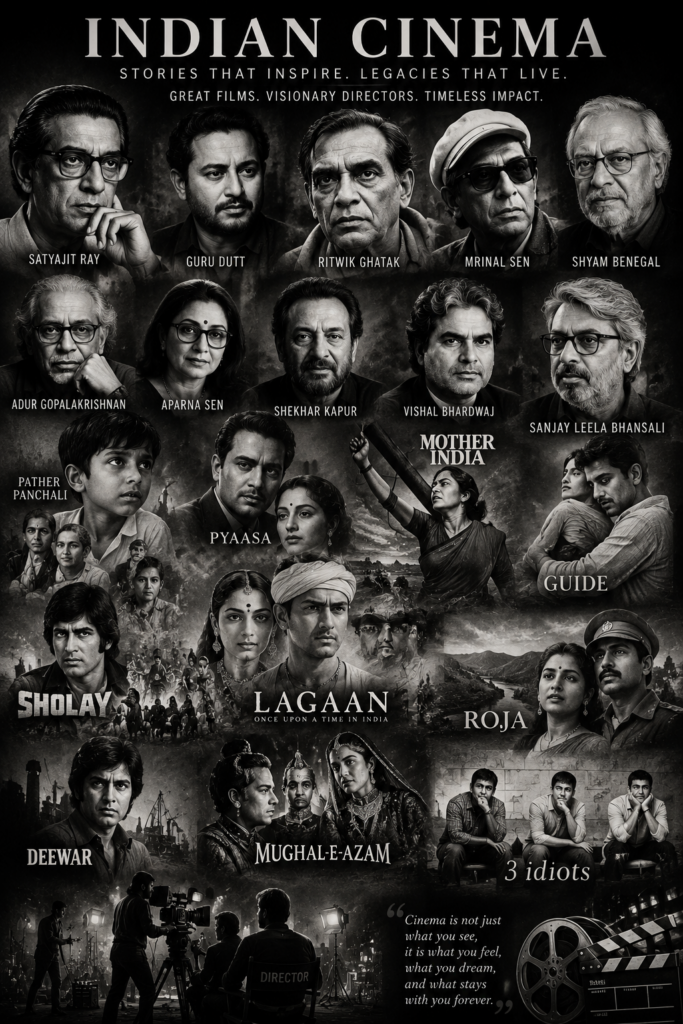
India stands at a pivotal moment. With its vast film industries and rich storytelling traditions, AI offers both promise and disruption.
Opportunities
Lower Production Costs
Independent filmmakers can now produce high-quality content with modest budgets, making cinema more accessible.
Regional Language Growth
AI-powered translation, dubbing, and subtitling can help films from regional industries reach national and international audiences.
Visual Effects
Affordable AI tools enable smaller studios to create sophisticated VFX previously reserved for big-budget productions.
Digital Preservation
AI can restore classic Indian films, remove damage, upscale resolution, and archive cinematic heritage.
Global Distribution
AI-assisted localization can expand the reach of Indian films to international audiences.
Challenges
Employment Displacement
Routine tasks in editing, design, dubbing, and post-production may increasingly be automated.
Copyright
Questions arise over ownership when AI systems are trained on copyrighted films, scripts, or performances.
Deepfakes
Unauthorized digital replicas of actors pose legal and ethical risks.
Creative Homogenization
Overreliance on AI-generated content could reduce originality and encourage formulaic storytelling.
Skill Gap
India needs widespread AI education for filmmakers, editors, writers, and technicians to remain competitive.
Comparative Overview
| Region | Primary Focus | AI Adoption |
|---|---|---|
| Europe | Artistic preservation and ethics | Moderate |
| United States | Industrial efficiency and commercial scalability | Very High |
| East Asia | Production innovation and technological integration | High |
| India | Cost reduction, localization, and democratization | Rapidly Growing |
Research Insights
Several trends are becoming evident:
- AI is automating technical and repetitive tasks more effectively than inherently creative ones.
- Human direction remains essential for emotional depth, cultural specificity, and artistic vision.
- Lower production costs are enabling a broader range of creators to enter filmmaking.
- Regulatory frameworks are evolving to address copyright, consent, and transparency.
- AI is accelerating the globalization of cinema through translation, dubbing, and localization.
The Future of Indian Cinema
India is uniquely positioned because of its diversity of languages, stories, and audiences. AI can empower regional filmmakers, reduce production barriers, and increase international visibility. However, success will depend on balancing technological innovation with cultural authenticity.
Future priorities include:

- Developing ethical guidelines for AI use.
- Investing in AI literacy for creative professionals.
- Protecting intellectual property and performers’ rights.
- Encouraging original storytelling rather than formulaic content.
- Building AI tools tailored to Indian languages and cinematic traditions.
Conclusion
AI is transforming filmmaking from a labor-intensive craft into a collaborative process between human creativity and machine intelligence. The United States demonstrates AI’s industrial potential, Europe emphasizes ethical integration and cultural preservation, and Asia showcases rapid technological adoption. India has the opportunity to combine these strengths by using AI to democratize filmmaking, expand regional cinema, and reach global audiences while safeguarding artistic identity.
The future of cinema is unlikely to be one where AI replaces filmmakers. Instead, it will favor filmmakers who learn to direct AI as a creative collaborator. Just as digital cameras did not eliminate cinematographers, AI is poised to redefine—not replace—the role of the filmmaker. In the coming decade, cinematic success will depend less on access to expensive equipment and more on the ability to combine human imagination, cultural insight, and intelligent technologies into compelling visual storytelling.