

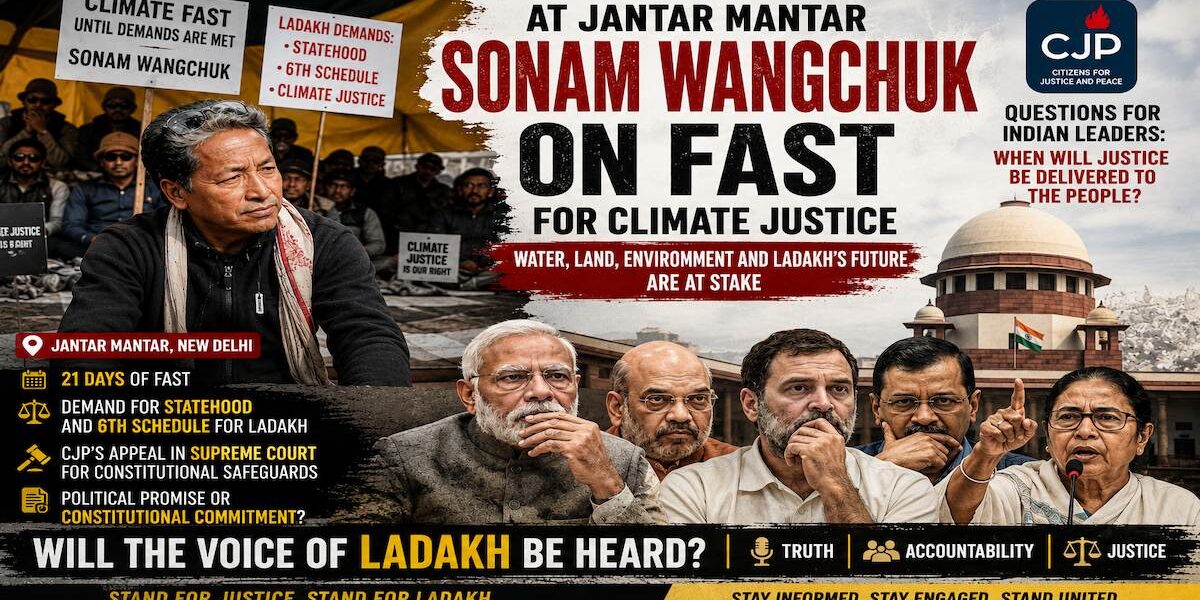
Sonam Wangchuk’s Fast: Genuine Protest or Political Weapon Against Modi Government?
Wangchuk has been fasting at Jantar Mantar since June 28, in solidarity with the Cockroach Janta Party’s sit-in. The core demand is the resignation of Education Minister Dharmendra Pradhan, tied to repeated examination paper leaks and corruption in the education system, plus sweeping reforms including scrapping the National Testing Agency. The trigger was the NEET-UG paper leak earlier this year, which affected millions of students and turned what had been an online satirical movement into a real street protest. He’s now on day 19, having lost over 9 kg, and has urged people to stop asking him to break the fast and instead join a July 20 “Chalo Sansad” march to Parliament.
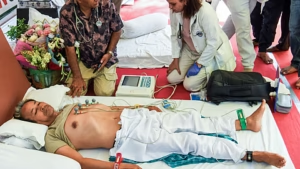
Image: Sonam Wangchuk at Jantar Mantar
His personal background doesn’t fit a typical activist-for-hire profile: he’s spent decades on Ladakh education reform and pioneered the Ice Stupa water-conservation technology, working on sustainability long before it became fashionable in policy circles – not a career politician or ideological partisan.
The Case That the Fast Is “Politically Minded”
This is a real argument being made, not a fringe one, and it has some evidentiary legs:
- BJP has explicitly framed the broader movement as politically engineered. Kerala BJP president Rajeev Chandrasekhar called the CJP movement a “cross-border influence operation… designed by vested interests to destabilize India… helped along by elements in our opposition.”
- Opposition leaders have used the fast to directly attack the government, not just express concern. Akhilesh Yadav alleged the BJP was indifferent to students and youth, framing it as part of a broader erosion of democratic values – and the protest has become a rallying point for opposition parties looking to corner the Centre on paper leaks, recruitment delays, and institutional failure.
- The movement has attracted heavy misinformation and amplification battles, which is typical of politically contested moments rather than a purely civic one – including fabricated claims about AI-generated crowd photos and false stories about organizers being deported.

Image: Sonam Wangchuk
Counter-evidence against the “purely political” read: the opposition’s dominant message has been to ask Wangchuk to stopfasting, not to milk it – Tharoor, Banerjee, Yadav, Thackeray, and Kejriwal all publicly appealed for him to end it, calling him someone who has “awakened the conscience of the nation.” If this were a coordinated opposition pressure campaign, letting him fast longer would serve that goal better. So the more accurate read is probably: a genuine grievance that opposition parties are opportunistically amplifying – not a fast that was manufactured by them.
Opposition Reaction
Opposition response has been near-unanimous in tone: sympathy plus political attack, delivered together.
- Shashi Tharoor: “please end your fast. You have awakened the conscience of the nation… India needs your voice for the long road ahead.”
- Mamata Banerjee, Uddhav Thackeray, Arvind Kejriwal, and actor Zeenat Aman also urged dialogue or an end to the fast.
- Akhilesh Yadav combined his appeal with a sharper political charge – accusing the ruling party of indifference to students and calling a fast-unto-death futile as a way to change the government’s mind.
- More than 1,800 artists, academics, writers, and social activists have separately backed the protesters’ de
mands while urging them to preserve their strength.
Government Stand
The government’s public posture has been procedural and non-committal rather than conciliatory:
- Pradhan, his ministry, and the government’s chief spokesperson did not immediately respond to requests for comment
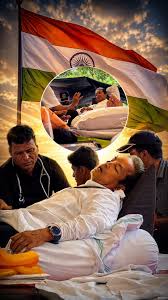
image:Sonam Wangchuk
on the resignation demand.
- The Centre told the Delhi High Court it would provide medical intervention “based on the advice of doctors monitoring his health,” during a hearing on a PIL seeking urgent care.
- The court itself stepped in, directing the Centre to ensure daily clinical monitoring and intervene when doctors advise, stating “life of any citizen is precious.”
Notably, there’s no reported statement of intent to accept the resignation demand or announce reform – the government’s visible engagement so far is health-monitoring compliance under court order, not policy response. That gap – a widely respected figure visibly deteriorating while the substantive demand goes unaddressed – is arguably a bigger reputational liability for the government than any single opposition statement.